My continuation of the My EDS Challenge from the Ehlers-Danlos Society!
Day 8: What Good Healthcare Looks Like-One of my neurologists, Dr. Joy Burke, spends time talking with me about how hEDS (hypermobility Ehlers-Danlos syndrome) is affecting me overall (triggering migraine and tension headaches). She takes notes and helps me find other specialists. This doctor looks at the whole picture, not just her specialty.
Also, she’s the first neurologist in my life to be able to reduce the amount of migraine days I have. Her visit notes are accurate, which is a big deal to me. I hate it when I see a provider and their notes are incorrect or include physical evaluations that they didn’t perform. Dr. Burke makes me feel seen and heard.
Day 9: My Appointment Essentials.-Things that help make me feel prepared include having a list of questions or topics I’d like to discuss. A good book. Water. Emesis bags. For very crucial appointments, a support person who can drive and maybe even take notes. I’m very lucky that my husband and his mom are often able to take me to appointments. My mother-in-law lives 15 minutes away from my hospital and has taken me to infusions and countless appointments. She gives me a place to stay overnight so that I don’t have to battle rush hour traffic early in the morning. And she bakes the best cookies, which always help.
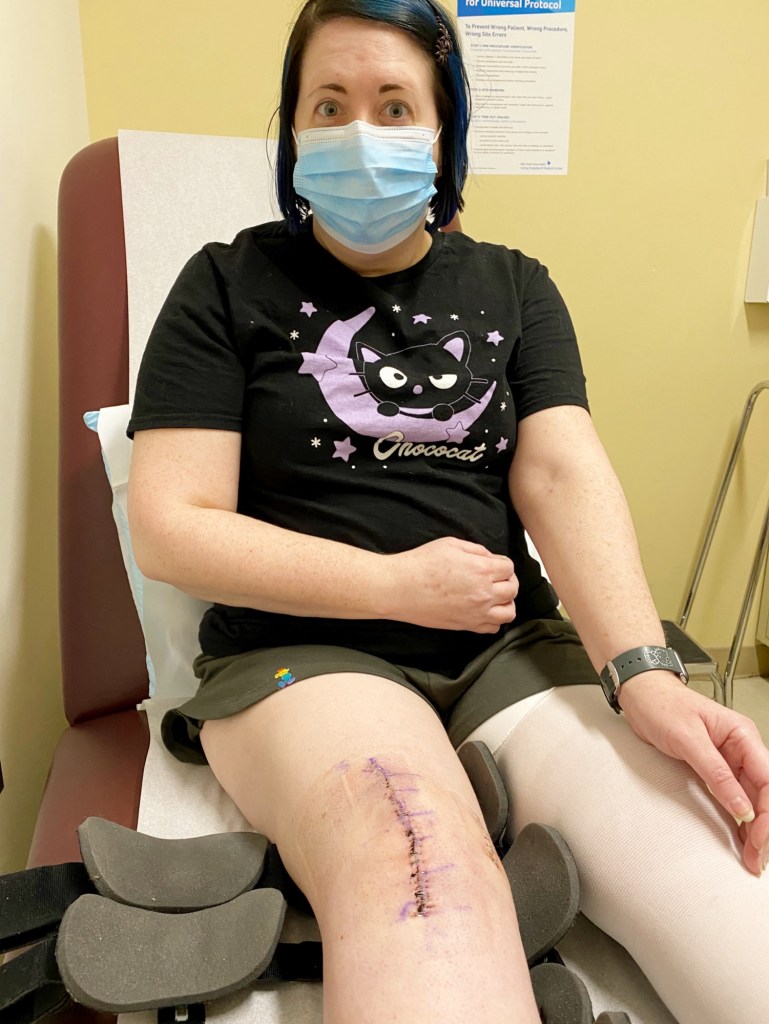
Here I am at a post-op appointment. It’s key to have someone with you to take Hospital Glam photos. Pretty sure my husband took this one.
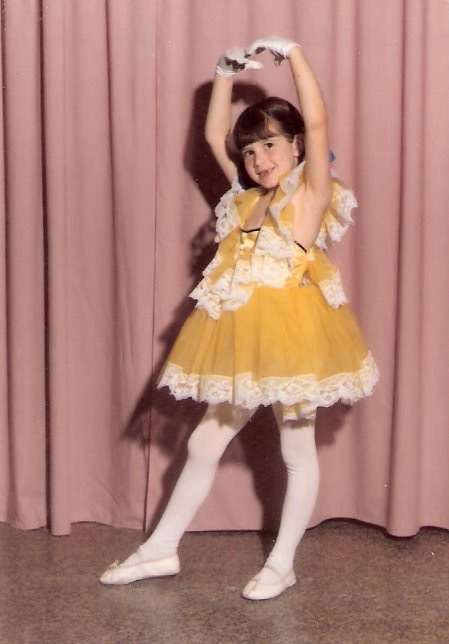
Day 10: A Question I Get Asked Often-What’s Ehlers-Danlos syndrome is asked of me all the time. Thankfully, it’s being asked by medical professionals less! My answer: it’s an inherited connective tissue disorder that affects my whole body. All of my joints are wonky & arthritic because my collagen is defective. I’m hypermobile (AKA double jointed), which was great when I was doing ballet as a kid, but it’s not so great on a daily basis.
Day 11: A Practical Tip That Helps.-Much to my chagrin, it’s asking for help when I need it. I often overdo things and make my pain worse. My husband is the best at helping me. He’s actually more mindful of my pacing than I am! I’m hoping to get a Visible Health band to help with my pacing. Right now, my Apple Watch alerts me when I’m in tachycardia. The Visible Band warns you before it happens.

Day 12: Thank a Healthcare Professional.-Physical therapist Teresa Swango made a huge impact on my life. She was the medical provider who recognized the signs of Ehlers-Danlos syndrome in me. I had never heard of it when she brought it up! Teresa always sought to further educate herself on EDS.
She even met with physical therapist Kevin Muldowney, author of Living Life to the Fullest with Ehlers-Danlos Syndrome, when he evaluated me at his Rhode Island practice. Teresa was very mindful of my hEDS when guiding my PT after surgeries, injuries, etc. She’s the best! Sadly, she left the practice where I saw her and moved just a bit too far away.
Day 13: Living With Comorbidities-One of the most common hEDS comorbidites that affect me on a daily basis is postural orthostatic tachycardia syndrome (POTS). It causes a high heartbeat and low blood pressure. Exercising, showering, and basic activities trigger POTS episodes in me. I take two medications for POTS, but I still have bad episodes. They’re usually exacerbated by heat and exercise.
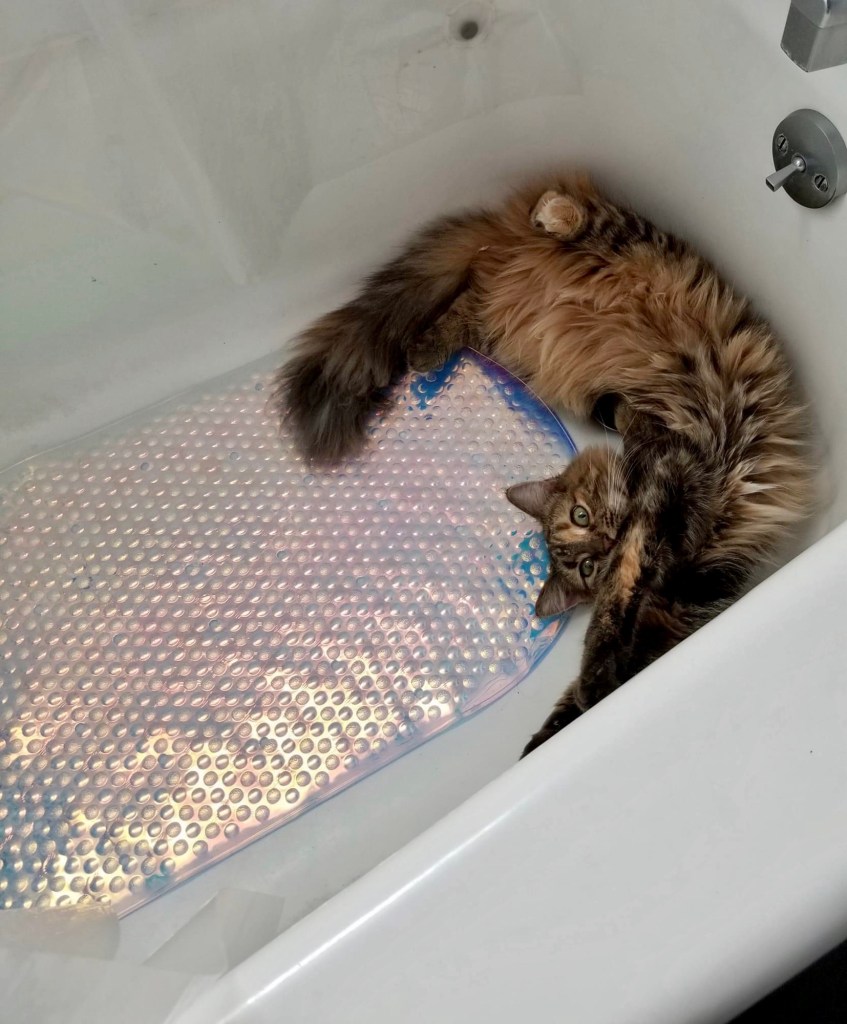
My nemesis is showering! I have passed out multiple times in the shower so I use a shower chair, keep the door open, and only shower when my husband is home. My cat, Ada, usually stays in the room with me. If she starts meowing a lot, my husband knows to check on me.
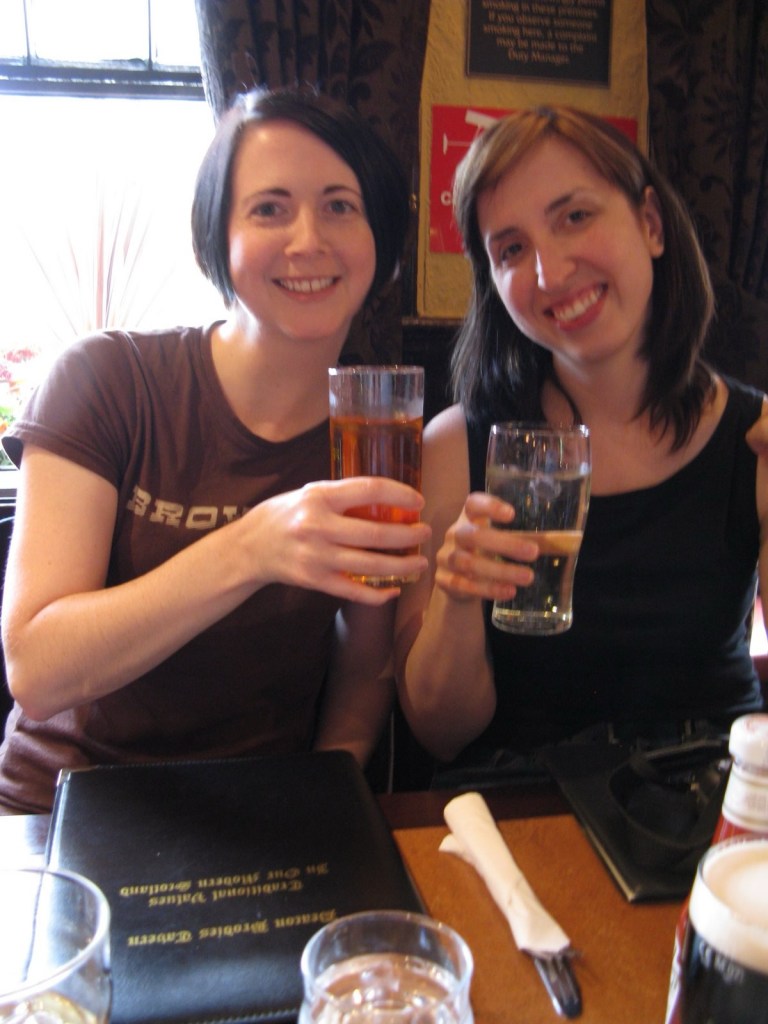
Day 14-Something I’ve Learned From Research About Ehlers-Danlos Syndrome: I’ve learned about how my vagus nerve is dysfunctional and what that means. The vagus nerve is responsible for regulating heart rate, digestion, breathing, immune responses, & mood. I have episodes that look like seizures, but my team actually think they’re vasovagal episodes. My bestie, Sarah, is good at demonstrating what they look like for doctors. That’s because she has a theater degree and has spent many hours in the ER with me.
 This Charming Amy
Leave a comment